
 The Formation of Pearl Harbor Lodge No. 598
In 1924, a group of twenty-five Masons came together with a shared vision: to establish a Masonic Lodge in Pearl Harbor. These men, hailing from various lodges under the jurisdiction of the Grand Lodge of California and other states, became the Charter Members of what would soon become Pearl Harbor Lodge No. 598. Ten of them were members of Lodge Le Progres de L’Oceanie No. 371, three from Solano Lodge No. 229, and others from lodges as far-reaching as Illinois, Connecticut, and Colorado
These Charter Members were: Robert E. Anglim, George W. Bigler, Albert Blatt, Edgar A. Brenner, William Buchalter, William S. Burr, Ferdinand H. Carlsen, Fred G. W. Cooper, John C. Craelius, Ray E. Dorhority, Duncan S. Ellis, Doile Greenwell, Charles J. Harkins, William T. Hart, Paul C. Hindemith, Fred J. Masser, Ray R. Mobley, Hendry J. Mulhall, William J. Rewcastle, Thomas N. Russell, Herbert R. Slocum, Harry W. Smith, William Stewart, Walter E. Thorton, Ernest H. Weidman
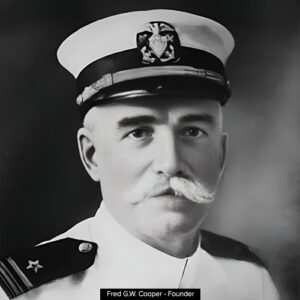
Fred G.W. Cooper: Father of the Lodge
Among these founders, Fred G.W. Cooper stands out as the guiding force behind the creation of the Lodge. Cooper, who had begun his Masonic journey in Canada, signed the first petition to the Grand Lodge of California for the establishment of the new Lodge. He served as the first Treasurer and laid the foundation for the success of Pearl Harbor Lodge, leaving a lasting legacy that is still felt today
Early Challenges and Growth
On May 1, 1924, a group of Masons, with a desire to support military personnel, particularly those in the U.S. Navy, gathered to explore the formation of a new Lodge. After guidance from Worshipful Brother Lester Petrie PM, Inspector of the 88th Masonic District, and a follow-up meeting with Grand Master Arthur L. Crites, the Naval Masonic Association was created. This group would go on to establish Pearl Harbor Lodge.
On September 25, 1924, Navy Lodge UD was officially opened. However, due to a name conflict with an existing Naval Lodge in California, the new Lodge was renamed Pearl Harbor Lodge No. 598 on October 16, 1924, under the jurisdiction of the Grand Lodge of California.
The Lodge’s Resilience
The early years saw rapid growth. Between 1924 and 1941, the Lodge was bustling with activity, often holding numerous meetings per month to process an average of twenty-five petitions per year. By 1932, Fred G. W. Cooper was honored for his 50 years of Masonic service with a gold button made from California gold, a symbol of his dedication to the fraternity.
Despite early challenges, including financial difficulties and missteps with documentation, the Lodge persevered. In the late 1920s, military members were welcomed, reflecting the Lodge’s close ties to the U.S. Navy. The 1930s saw the Lodge providing support to military families and members, reflecting its commitment to Masonic charity.
The Impact of World War II
World War II brought significant disruptions. On December 7, 1941, the attack on Pearl Harbor halted nighttime Masonic meetings due to the imposed blackout. Nevertheless, Pearl Harbor Lodge adapted, holding meetings during the day under military restrictions. Even during these difficult times, the Lodge continued its work, conferring degrees and welcoming military men into Freemasonry.
Post-War Stability and Growth
After the war, the Lodge continued to grow in membership and influence, purchasing cemetery plots and investing in the future of its members. The Lodge’s traditions, such as hosting the Grand Master during his visits to the Islands, became lasting customs. In 1949, the Lodge celebrated its twenty-fifth anniversary with Past Masters leading the degree work, reflecting on the fraternity’s progress since its founding.
A New Era in the 1950s
By 1950, Pearl Harbor Lodge had found a permanent home in the Honolulu Masonic Temple, a partnership with other local lodges. The stability provided by this move allowed the Lodge to focus on improving its rituals, welcoming new members, and continuing its mission of brotherly love, relief, and truth. The Lodge’s charitable efforts and strong bonds with military Masons remained central themes in the years that followed.
As the Lodge continued to thrive, it began discussions about the formation of a Grand Lodge of Hawaii, a dream that would be realized in 1989 with the creation of the Most Worshipful Grand Lodge of Free and Accepted Masons for the State of Hawaii. Pearl Harbor Lodge No. 598 transitioned into this new jurisdiction as Pearl Harbor Lodge F&AM, carrying forward its proud legacy of service and fraternity.
The Legacy Continues
The legacy of Pearl Harbor Lodge F&AM is one of resilience, charity, and brotherhood. From its humble beginnings in 1924 to its role in establishing the Grand Lodge of Hawaii, Pearl Harbor Lodge has continually demonstrated the enduring power of Freemasonry to unite men in service to their communities, their country, and each other.
As the Lodge moves forward, it remains dedicated to its founding principles, ensuring that the light of Freemasonry continues to shine brightly in Pearl Harbor and beyond.